 Daily Feed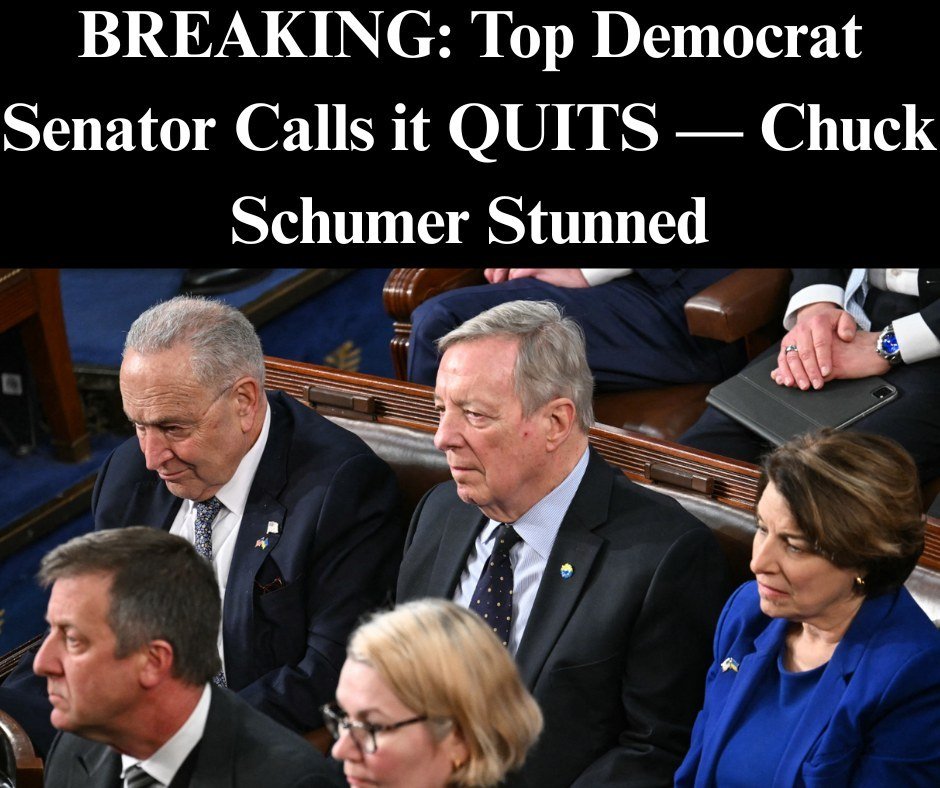
In a move that has rocked the political landscape, the long-serving second-ranking member of the Senate Democratic leadership, has announced his decision to retire at the end of next year. The news sent shockwaves through Washington, D.C., as it opens up one of the most powerful positions in the U.S. Senate, with both the leadership structure and Illinois’ political future now in flux.
Durbin’s retirement marks the end of an era for the Senate. At 80 years old, he has served in the Senate since 1996, holding the position of Senate Democratic Whip since 2005. In this influential role, Durbin worked closely with Senate Majority Leader Chuck Schumer and was an integral part of the Democratic leadership team. He also served as the right-hand to the late Harry Reid, making him a central figure in shaping legislative priorities within the Senate for more than two decades.
Durbin’s announcement comes at a time when the Senate is preparing for a pivotal election cycle. With his retirement, a number of political dynamics are set to shift, including the leadership of key Senate committees and the race for his Illinois seat. The announcement of his retirement has already sparked a scramble among Democrats to secure his leadership position in the Senate, while also triggering a competitive primary race in Illinois.
Durbin’s Legacy and Influence
Durbin’s career in the Senate has been defined by his dedication to advancing progressive legislation, especially on issues such as immigration, healthcare, and criminal justice reform. As Chairman of the Senate Judiciary Committee, Durbin played a pivotal role in the confirmation of Ketanji Brown Jackson, the first Black woman to serve on the U.S. Supreme Court. His tenure also saw him championing legislation to aid Dreamers—undocumented migrants brought to the U.S. as children, a cause that has been central to his political identity.
In a statement announcing his retirement, Durbin reflected on the decision as one that had weighed heavily on his heart. “The decision of whether to run for re-election has not been easy. I truly love the job of being a United States Senator. But in my heart, I know it’s time to pass the torch,” he said. His decision to step down is a significant moment for both Illinois and the Senate, leaving a void that will be hard to fill.
Durbin’s retirement also opens up several influential positions within the Senate. His role as Judiciary Committee chair, where he presided over critical confirmations and legislative efforts, is now up for grabs. The impact of his departure will be felt across multiple areas of legislation, particularly for Democrats who will need to adjust their strategy for the upcoming midterms and beyond.
The Impact on Illinois Politics
Durbin’s retirement announcement sets the stage for a competitive and contentious primary race in Illinois, a state with a strong Democratic presence. Several high-profile Illinois Democrats are already preparing to enter the race to succeed him, including Reps. Raja Krishnamoorthi, Robin Kelly, and Lauren Underwood, as well as Illinois Lt. Gov. Juliana Stratton. These candidates will likely vie for a chance to continue Durbin’s legacy while making their own mark on the political landscape of the state.
Durbin’s retirement has set the stage for what could be a heated Democratic primary, with the winner poised to represent Illinois in a key Senate seat. With Illinois being a traditionally blue state, the competition will likely focus on maintaining the state’s Democratic stronghold while navigating the complex challenges of national politics.
Durbin’s absence from the Senate will undoubtedly change the dynamics of Illinois politics. His deep connections within the Senate and his decades of service to the state have left a lasting imprint. Those vying to succeed him will need to step into a role that requires not only experience but also the ability to navigate the nuances of both state and national politics.
The Broader Impact on the Senate
Durbin’s retirement adds to a growing trend among Senate Democrats who have chosen to step down rather than seek re-election in 2026. He becomes the fourth Senate Democrat to announce their retirement, following the announcements of Senators Jeanne Shaheen of New Hampshire, Gary Peters of Michigan, and Tina Smith of Minnesota. These retirements, coupled with the ongoing challenges of a highly competitive election cycle, have put the Senate’s control into play for the coming years.
