 Daily Feed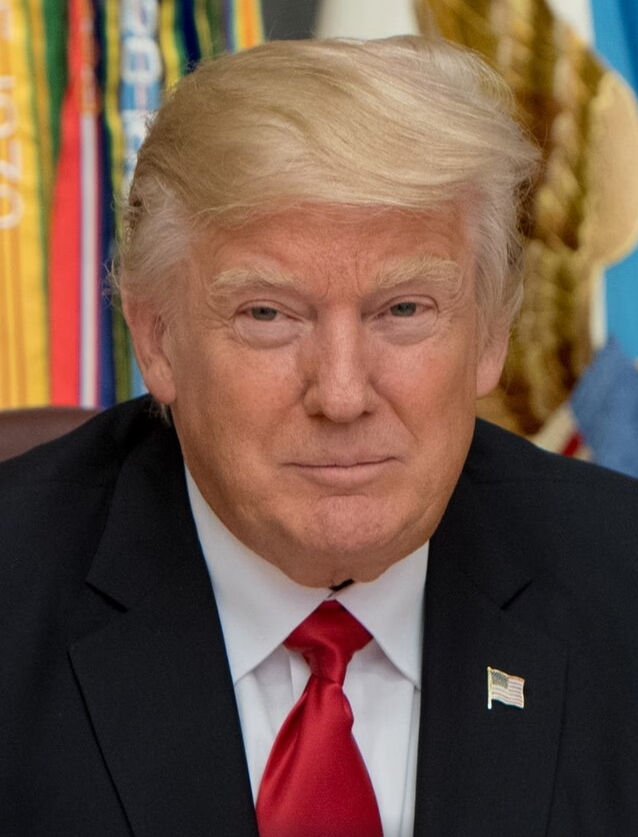
“I Don’t Really Believe I’ve Made Mistakes”: Audience Erupts in Laughter as Trump Deflects Question About First 100 Days Missteps
In a moment that captured both President Donald Trump’s unwavering self-confidence and the public’s varied reactions to his leadership style, an audience at a NewsNation Town Hall broke into laughter when the president struggled to identify any mistakes he had made during his first 100 days back in office. The exchange, which took place during a televised event hosted by Chris Cuomo, highlighted Trump’s characteristic reluctance to acknowledge missteps while offering insight into his perspective on his administration’s early accomplishments and challenges.
The Town Hall Setting: A Platform for Presidential Assessment
As part of the events marking his 100th day as the 47th President of the United States on April 29, Trump participated in a NewsNation Town Hall, calling in to join a conversation moderated by Chris Cuomo. The panel assembled for the discussion represented diverse political perspectives, featuring conservative commentator Bill O’Reilly, sports personality Stephen A. Smith, and political strategists from both Democratic and Republican backgrounds.
The town hall format, which traditionally allows for direct audience questions to political figures, created an opportunity for voters to seek candid responses from the president about his performance thus far. As the milestone of 100 days has become a standard benchmark for assessing new administrations since Franklin D. Roosevelt’s presidency, the timing provided a natural moment for reflection on both achievements and shortcomings.
Throughout the first portion of the discussion, Trump addressed various policy initiatives, with particular emphasis on his implementation of substantial tariffs on imported goods from numerous countries. The president asserted that his aggressive trade stance was already yielding results, claiming that foreign nations were contacting the United States “morning, noon and night” in efforts to negotiate new trade arrangements more favorable to American interests.
The Question That Prompted Laughter
The audience’s response—a mixture of laughter, some supportive applause, and visible reactions of disbelief from others—encapsulated the polarized public perception of Trump’s leadership style. For supporters, the moment likely reinforced their appreciation of the president’s unwavering conviction in his decision-making. For critics, it exemplified what they view as an inability to acknowledge errors or adjust course when necessary.
Context: Controversial Decisions and Administrative Missteps
The audience’s laughter carried additional weight given several controversial decisions and acknowledged administrative errors that had occurred during Trump’s first 100 days. Perhaps most notably, the exchange came shortly after Trump’s administration had publicly admitted that a Maryland father had been “accidentally deported” due to what officials described as an “administrative error”—directly contradicting the president’s claim of mistake-free governance.
This deportation incident represented just one of several contentious moments during Trump’s first 100 days. His administration’s implementation of extensive tariffs on goods from both adversaries and traditional allies had generated significant economic uncertainty and criticism from various sectors. Business leaders had expressed concern about supply chain disruptions and potential price increases for American consumers, while some economists warned of potential retaliatory measures from affected nations.
Immigration enforcement initiatives had similarly sparked intense debate, with advocates for stricter border controls praising the administration’s approach while critics raised humanitarian concerns and questioned the legality of certain policies. The deployment of military personnel to assist with border operations further intensified these discussions.
Foreign policy decisions, including shifts in approach to NATO allies and negotiations with Iran, had also generated substantial discussion among international relations experts and foreign governments, with some praising a more assertive American posture while others worried about damage to longstanding alliances.
Against this backdrop of substantive policy controversies and acknowledged administrative errors, the president’s inability or unwillingness to identify any mistakes struck many observers as disconnected from the complex realities of governance.
