 Daily Feed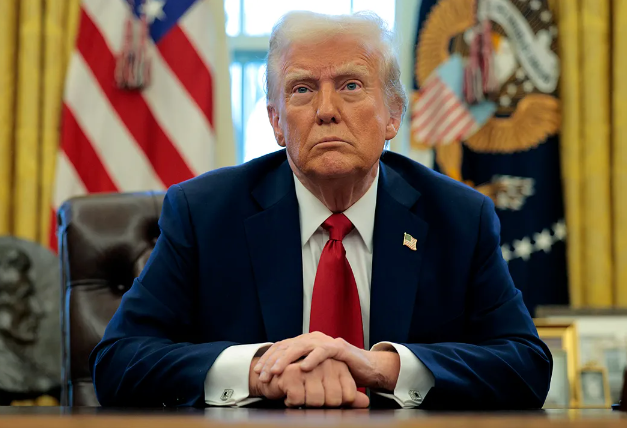
President Donald Trump spoke with several GOP senators on Monday, including ones who have raised concerns about his domestic policy bill, as the chamber gears up to make changes to the legislation and congressional leaders aim to put the package on Trump’s desk by July 4.
In a sign of the challenges ahead for GOP leaders, a number of Republican senators have raised concerns about the House-passed package, demanding changes that could be tough for Speaker Mike Johnson’s narrow majority to swallow when it moves back over to the House.
The president met with Senate Majority Leader John Thune at the White House on Monday, who said they “covered a lot of ground. A lot about the big, beautiful bill.” A White House official confirmed Thune and Trump met.
Several of the senators who have been most vocal about their concerns — Sen. Josh Hawley of Missouri, Sen. Ron Johnson of Wisconsin and Sen. Rand Paul of Kentucky — said that they discussed the package with the president.
Paul told CNN that he “had a lengthy discussion” with Trump this week and told the President that he can’t back the bill if an increase to the debt ceiling remains in the package.
“It’s just not a conservative thing to do, and I’ve told him I can’t support the bill if they are together. If they were to separate out and take the debt ceiling off that, I very much could consider the rest of the bill,” said Paul, who noted that Trump “did most of the talking” on their call.
Johnson said he “got a real nice call from the President this morning, had a nice conversation, very respectful,” as the Wisconsin Republican continues to press the President for further assurances that Congress will commit to more stringent spending cuts than what were included in the House bill.
Johnson opened the door, however, to being flexible in how the White House could assuage his concerns and said he was open to getting assurances for future cuts to be made outside of just the framework of Trump’s “big, beautiful bill.”
Asked if he would be open to passing something that looked like the House bill but with a “promise” for other spending changes in the future, Johnson said, “I want to help the president succeed in this thing so I’ve got a pretty open mind. My requirement has always been a commitment to a reasonable pre-pandemic level of spending and a process to achieve and maintain it.”
Trump addressed Senate Republicans in a Truth Social post on Monday, writing, “With the Senate coming back to Washington today, I call on all of my Republican friends in the Senate and House to work as fast as they can to get this Bill to MY DESK before the Fourth of JULY. Thank you for your attention to this matter!”
Hawley, who has expressed deep concerns with potential changes to Medicaid, posted on X that he also spoke with the president about the bill.
“Just had a great talk with President Trump about the Big, Beautiful Bill. He said again, NO MEDICAID BENEFIT CUTS,” wrote Hawley.
He told reporters later that he is very concerned about the impact of the tax on providers because it could cause already struggling rural hospitals in his state and around the county to close, something that would be akin to a cut in benefits if Medicaid recipients can’t access health care.
“I’m also worried about this sick tax, you know, where now charging people to go to the doctor, pay before they can see a doctor. You know, they’re on Medicaid because they can’t afford to buy private health insurance. So, if they could afford to be paying out of pocket, they wouldn’t be on Medicaid. So I don’t know why we would tax them and penalize them,” said Hawley.
Hawley said in his phone call with Trump, the president asked him what he thought the prospects for the bill are in the Senate.
“I said, ‘good if we don’t cut Medicaid, if we do no Medicaid benefit cuts. And he said, I’m 100% supportive of that’,” he said. “He specifically said, ‘waste, fraud and abuse, fine and work requirements, fine…but no benefit cuts’. And I said, ‘we are singing from the same handbook.”
GOP senators lay out red lines for Trump’s ‘big, beautiful bill’
The various changes that GOP senators would like to see to the sweeping domestic policy bill make clear that the process of passing the “big, beautiful bill” is far from the finish line.
“The world hasn’t changed since we’ve been on recess,” Sen. Thom Tillis told reporters on Monday evening. “There’s work to do there.”
The North Carolina Republican, who’s up for reelection in 2026, noted that about 620,000 recipients have enrolled in Medicaid since his state expanded the program. It’s been a concern among some lawmakers that work requirements implemented in the House’s bill could particularly impact coverage in Medicaid expansion states.
“We’ve got to work on getting that right, giving the state legislatures and others a chance to react to it, make a recommendation or make a change, and that’s all the implementation stuff that we’re beginning to talk about now that we’re in possession of the bill,” Tillis said.
Maine Sen. Susan Collins, who will also have to defend her seat next year, finds the House-drafted work requirements “acceptable,” but voiced other concerns with a provision related to provider taxes that could impact how states receive federal dollars.
“I’m very concerned about not only low-income families, but our rural hospitals,” she said.
Sen. Shelley Moore Capito told CNN that she did roundtables with constituents in West Virginia over the recess and “there’s a lot of concern” about Medicaid at home.
“We haven’t had a chance to digest how it’s going to impact our hospitals,” she said.
Sen. Jerry Moran of Kansas said he was also worried about “harming hospitals that we just spent COVID money to save,” adding that he’ll be “lobbying to try to get something that’s acceptable to me” on Medicaid in the bill.
Another red line floated by some Senate Republicans is the roll back of Biden-era clean energy tax credits, which could begin with several consumer credits as soon as the end of this year.
Tillis said he’s looking at the issue “through the lens of a businessperson,” explaining, “it’s easy, you know, from a political standpoint, to cancel programs that are out there. We need to be smart about where capital has been deployed and to minimize the impact on the message that we send businesses that every two or four years we have massive changes in our priorities for energy transition.”
He said lawmakers should “show some respect” to businesses that have employed capital on clean energy initiatives, adding “I think we can get there” before walking into a meeting of the Senate Finance Committee.
On the clean energy tax credit phaseout timeline, Moran said, “I think there’s a lot of Senate sentiment that it’s too rapid.”
Still, he wouldn’t say if he’d vote against the existing bill, noting that he would lose “leverage,” adding that the whole package has “lots of things that I care about.”
Sen. Markwayne Mullin, who has been playing a key role in talks with his former House colleagues, said he thinks there are “two big issues” that the Senate can’t touch, which were central in House GOP leadership’s down-to-the-wire negotiations with holdouts.
“We have a structure, a great structure, the House sent over. We don’t have to tear down that structure. We may have to put some more decorations in some of the rooms and maybe repaint some of the walls, but it’s got a good structure to it,” he said.
The Oklahoma Republican said the Senate should not go below the about $1.6 trillion in spending cuts promised to conservative hardliners or change the state and local tax deduction provisions carefully negotiated with House Republicans from high tax states.
“As long as we leave those two things there, and then we put our fingerprints on the rest of it, I think we’re in good shape,” he said.
Sen. John Cornyn, an ally of GOP leadership, said he thinks they’ll try to have the bill on Trump’s desk by July 4, “which means things are going to have to move at a much faster schedule.”
He noted that with the debt ceiling limit closing in, the House may have to just accept what passes the Senate, telling reporters, “I’ve been around here long enough to see the Senate jam the House and the House jam the Senate.”
