 Daily Posts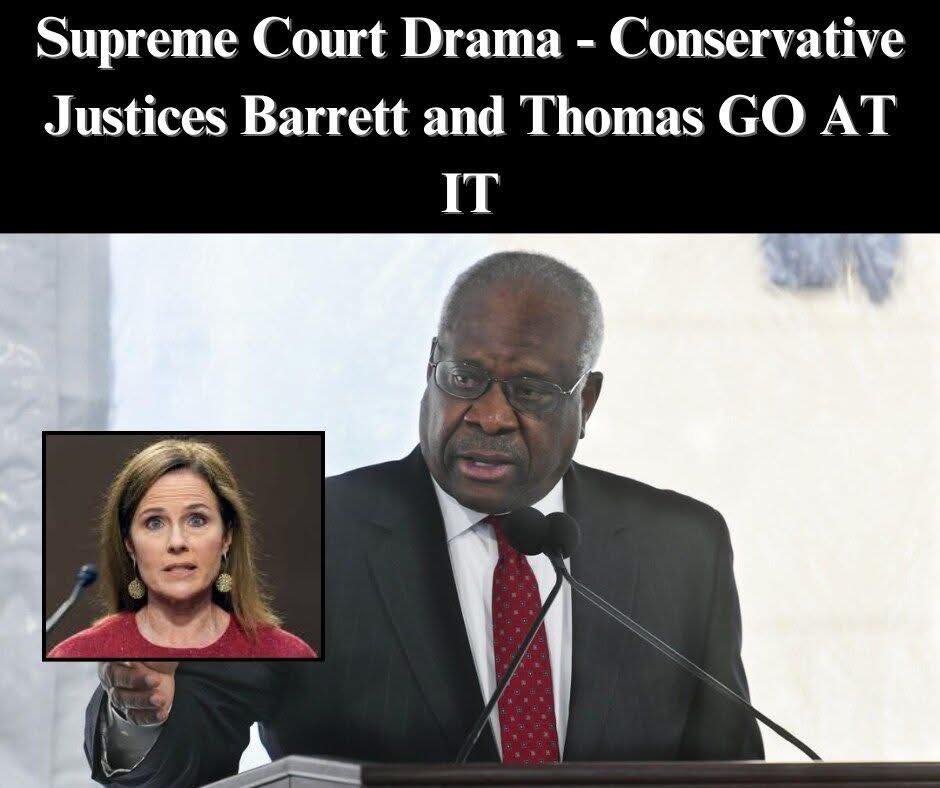
U.S. Supreme Court Justice Amy Coney Barrett recently voiced concerns about reviving a nearly century-old legal principle during oral arguments in a case involving the Federal Communications Commission (FCC). Her comments suggest a more cautious approach compared to some of her colleagues, particularly Justice Clarence Thomas.
At the heart of the discussion is the nondelegation doctrine, a legal theory suggesting that Congress cannot delegate its legislative powers to federal agencies. Though rarely used since the 1930s, some legal experts and justices believe it should be reconsidered in today’s regulatory environment.
The case before the Court—Federal Communications Commission v. Consumers’ Research—challenges the legality of a fund that helps extend communication services to rural and economically disadvantaged areas. Telecommunications companies are required to contribute to the fund, with some of the costs ultimately passed on to consumers.
Consumers’ Research, a conservative advocacy group, argued that the program amounts to a form of taxation without representation. They contend that Congress should be solely responsible for authorizing such fees.
During oral arguments, Barrett challenged that view, saying that comparing the FCC’s actions to direct taxation lacked substance. “That seems a little bit hollow,” she said, responding to a statement from the group’s attorney. She also questioned whether arbitrary funding caps would be effective, adding that citing figures like “$3 trillion or $5 trillion” without context was not meaningful.
Justice Clarence Thomas, who has long supported a strict interpretation of the Constitution, suggested that the FCC’s actions could be restricted under the nondelegation doctrine. However, Barrett pushed back on the practicality and clarity of applying that doctrine in the current case.
The discussion also highlights broader differences between Barrett and Thomas, who have diverged in other cases as well. In United States v. Rahimi, for instance—a case involving gun rights and domestic violence restraining orders—Barrett pointedly referenced the allegations against the defendant and supported the idea that courts can restrict gun ownership in specific civil contexts. Thomas, in contrast, focused more narrowly on the constitutional language.
The FCC was established in 1934 to ensure that all Americans could access reliable and affordable communication services. In defense of the current funding program, the U.S. Solicitor General argued that it helps meet this mandate by supporting underserved communities.
Opponents, however, claim the program lacks accountability. A law firm representing Consumers’ Research alleged misuse of funds on non-essential expenses and questioned the effectiveness of the program.
The Supreme Court is expected to deliberate on the case for several months. A final ruling is likely to be released in late 2024 or early 2025.

 Daily Feed