 Daily Feed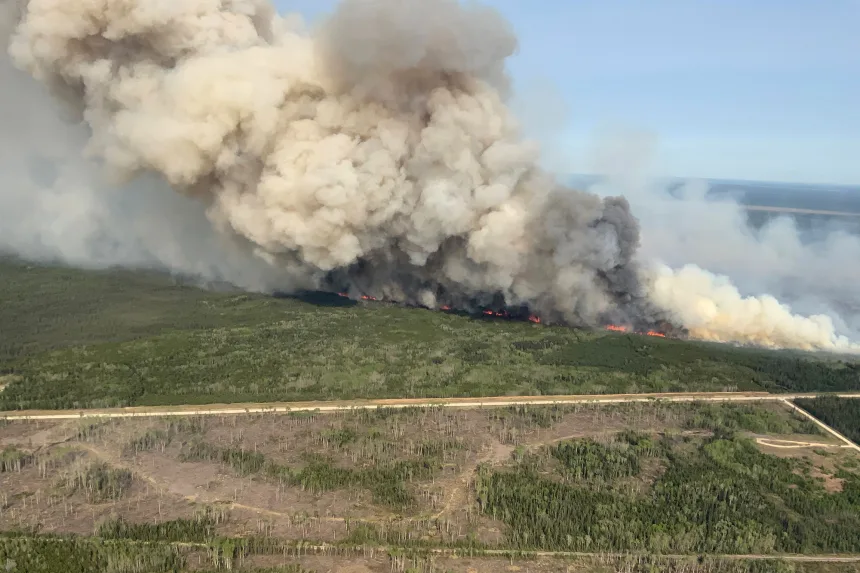
Massive wildfires burning out of control in western and central Canada are forcing thousands to flee as dire forecasts for the country’s fire season come to fruition. The intensifying blazes are also sending hazardous smoke toward major cities in the United States.
The premiers of Manitoba and Saskatchewan have declared states of emergency, and much of Canada, from the Northwest Territories and Alberta to Ontario, are at “extreme” risk of wildfires on Friday — the highest level on Environment Canada’s fire risk scale.
There are just over 170 wildfires burning across Canada as of Thursday, according to the Canadian Interagency Forest Fire Center, and about half are uncontrolled. The country raised its National Preparedness Level to level 5 of 5 on Thursday, which is unusually high for this early in the fire season. Last year, Canada didn’t reach that level until July 15.
In Manitoba, around 17,000 people are under evacuation orders, including the city of Flin Flon, Pimicikamak Cree Nation and the northern community of Cross Lake, along with Mathias Colomb Cree Nation, according to CNN’s Canadian news partner CBC News.
The province’s state of emergency will remain in effect for a month and may be extended if conditions warrant, said Manitoba Premier Wab Kinew.
“This is a moment of fear and uncertainty. This is a moment of concern,” Kinew said, acknowledging this is the largest evacuation order in “in most people’s living memory.”
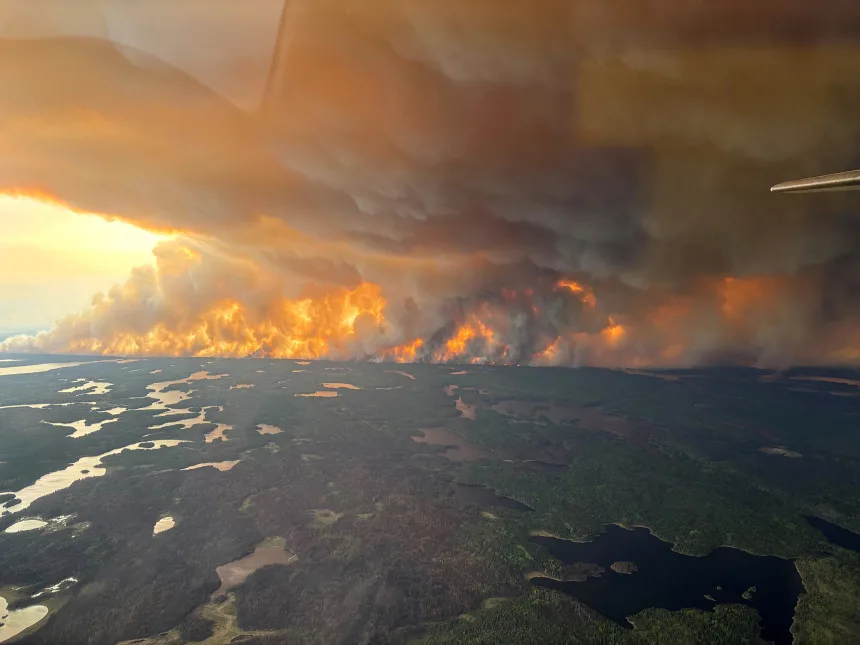
Around 2,000 residents were stranded in Pukatawagan, also known as Mathias Colomb, after thick smoke from the encroaching fire shut down its airport at around 6:30 p.m. CDT Thursday, the First Nation’s chief, Gordie Bear, told CBC.
“We’re getting desperate now. It’s getting rougher,” Bear said.
Children and elders were among the community members still trying to evacuate, Pukatawagan resident Venessa Hart told CBC Thursday evening.
“How they’re going to get us out now?” Hart said. “I’m scared. I’m really scared. My anxiety is through the roof.”
Wildfires have also forced thousands of evacuations in neighboring Saskatchewan, and Premier Scott Moe declared a 30-day provincial emergency Thursday. It followed calls from First Nations leaders to take that step, noting “deep concerns” over resources to battle the fires.
“It’s a very serious situation that we’re faced with in Saskatchewan. We do need some rainfall and we need that sooner rather than later,” Moe said at a news conference.
Climate change is leading to an increase in wildfire risk days, as well as more frequent and larger fires that exhibit more extreme wildfire behavior.
Canada had its worst wildfire season on record in 2023, when extreme heat and drought helped propel blazes that burned more than 45 million acres. Last year’s fire season was Canada’s second-worst of the century. Some of those blazes also sent thick, hazardous smoke into US cities
This year, wildfires have burned more than 1.58 million acres in Canada, about 40% above the 10-year average for this point in the year.
Nearly 90% of the acreage burned has been in Saskatchewan and Manitoba, though there are many ongoing blazes in British Columbia and Alberta as well, where some evacuations are underway.
