 Daily Inspire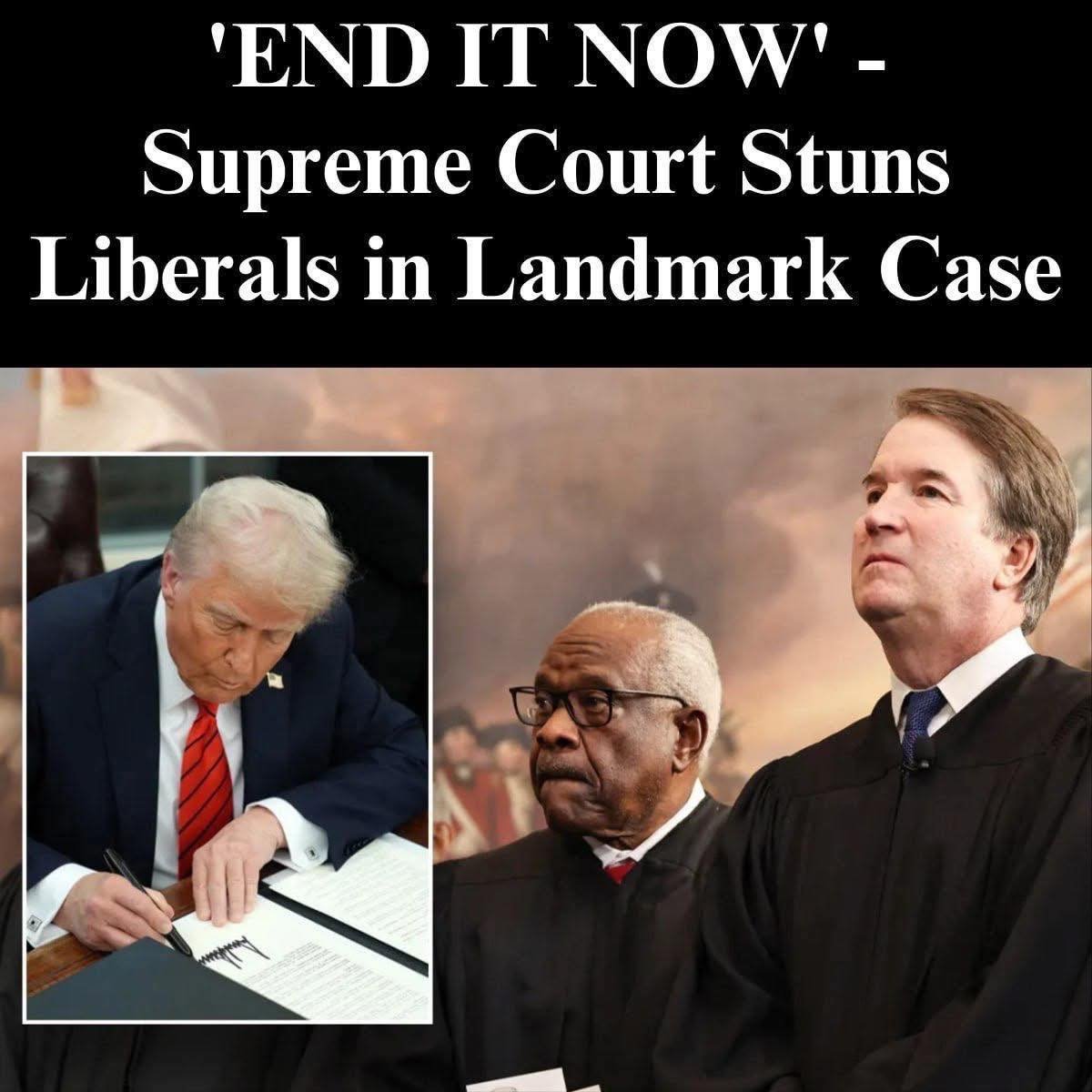
The U.S. Supreme Court recently heard oral arguments in a case that may influence future workplace discrimination claims—particularly those involving majority-group employees. At the center of the debate is a woman who claims she was denied a promotion and later demoted because of her sexual orientation.
The case was brought by a former Ohio state employee, identified as Ames, who worked for the Ohio Department of Youth Services for more than 15 years. She alleges that her supervisor, who is gay, passed her over for promotion in favor of less qualified gay candidates. Ames, a straight white woman, believes this treatment constituted unlawful discrimination.
Her claim was initially dismissed by the U.S. Court of Appeals for the Sixth Circuit, which ruled that Ames had failed to meet a legal threshold known as a “prima facie” case—a necessary early showing of potential discrimination under Title VII of the Civil Rights Act of 1964. The lower court cited a lack of “background circumstances” suggesting that the employer was biased against members of a majority group.
Title VII prohibits employment discrimination based on race, color, religion, sex, or national origin. In recent years, courts have expanded the understanding of the law to include protections for sexual orientation and gender identity. Still, proving discrimination against members of majority groups has often required additional burdens of proof.
However, during Tuesday’s Supreme Court session, there appeared to be rare consensus among the justices. Justice Neil Gorsuch described the situation as one of “radical agreement,” with most of the bench and even the state of Ohio seeming to side with Ames on a key point: that the so-called “background circumstances” requirement may not be appropriate.
“We agree, Ohio agrees, that it’s wrong to treat people differently,” said Ohio Solicitor General Elliot Gaiser in response to Justice Amy Coney Barrett’s questioning.
Justice Sonia Sotomayor, a member of the court’s liberal wing, remarked that the facts of Ames’ case raised questions. “There’s something suspicious about what happened here,” she said.
The high court’s ruling could affect how lower courts handle discrimination claims brought by majority-group plaintiffs. If the justices strike down the “background circumstances” requirement, it would lower the initial barrier for individuals in majority demographics to pursue legal recourse under Title VII.
While the justices seemed inclined to give Ames another chance to argue her case, the court’s final decision will determine whether her lawsuit can proceed. It’s still unclear whether she will ultimately prevail, but the broader implications could ripple across employment law in the United States.
A ruling is expected later this year.

 Daily Feed