 Daily Feed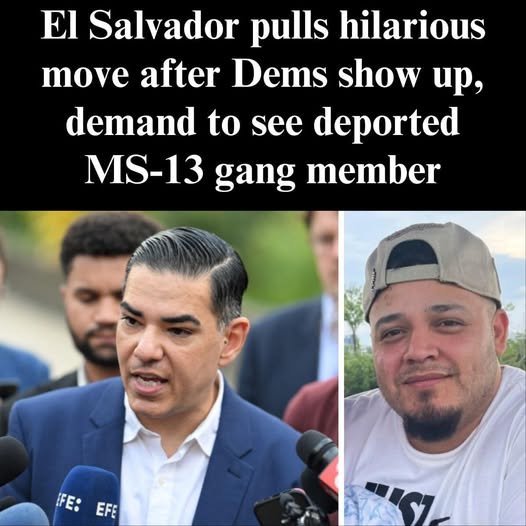
A recent trip by a group of four House Democrats to El Salvador has ignited a political and legal firestorm after their demand for access to Kilmar Ábrego García, a deported MS-13 suspect, was denied by the Salvadoran government. The delegation’s visit, intended to pressure both the Salvadoran government and the Trump administration for Ábrego García’s release, has raised complex questions about foreign policy, constitutional authority, and the intersection of law enforcement and human rights.
The Trip to El Salvador and the Denial of Access
On Monday, Reps. Yassamin Ansari (Arizona), Robert Garcia (California), Maxwell Frost (Florida), and Maxine Dexter (Oregon) traveled to El Salvador to advocate for the immediate release of Kilmar Ábrego García, a Maryland resident who was deported despite a federal court order barring his removal. The delegation’s visit sought to confront President Nayib Bukele and the Trump administration directly, demanding Ábrego García’s return to the United States and access to legal counsel.
However, upon arrival, the lawmakers were denied access to Ábrego García, who had been detained in El Salvador after his deportation. In response to this, they escalated their efforts by demanding “daily proof of life” and immediate access to his legal team. The lawmakers also called on Secretary of State Marco Rubio to ensure that Ábrego García’s rights were upheld. Rep. Ansari expressed frustration, saying, “Since we were not able to get the answers we need today from the embassy, we have written a letter just as of 30 minutes ago to Secretary of State Marco Rubio demanding daily proof of life for Mr. Ábrego García and, of course, demanding his safe return home.”
Legal and Political Fallout
This incident has become a central point of contention for both lawmakers and legal experts, particularly regarding the constitutional implications of the case. While the U.S. Supreme Court had previously ordered that the government “facilitate” Ábrego García’s return, it stopped short of demanding that he be physically returned to the United States. The Trump administration has repeatedly argued that federal courts lack the authority to interfere in foreign policy and that the use of the Alien Enemies Act, invoked by President Trump to expedite the deportation of MS-13 members, is constitutional.
The controversy stems from Ábrego García’s alleged involvement with the MS-13 gang, a group the Trump administration has designated as a terrorist organization. According to government officials, Ábrego García was involved in human trafficking and was detained during a routine traffic stop in Tennessee in December 2022. Authorities claim that during the stop, Ábrego García and his passengers showed signs of human trafficking, as they were traveling without luggage, despite a long journey.
Questions About the Handling of Ábrego García’s Case
In the aftermath of the delegation’s visit, additional questions have surfaced about the legitimacy of the information surrounding Ábrego García’s current location. Following a meeting last week with Sen. Chris Van Hollen of Maryland, which allowed him brief access to Ábrego García, concerns were raised about the authenticity of the images taken during their interaction. Van Hollen, who was granted a brief meeting after two days of negotiations, described Ábrego García as “traumatized” from his time in the notorious CECOT maximum-security prison, where many gang members are held.
However, the photograph of Van Hollen and Ábrego García, taken during the meeting, has raised suspicions among the Democratic lawmakers and Ábrego García’s legal team. Chris Newman, the attorney representing his family, questioned the integrity of the meeting, suggesting that it may have been a staged photo-op orchestrated by the Bukele government. “We know nothing of Mr. Ábrego García’s whereabouts since the staged photo op on Thursday,” Newman said, expressing distrust in the representations made by both the U.S. and Salvadoran governments.
The discrepancy between what was presented and the actual conditions surrounding Ábrego García’s detention has fueled suspicions about both governments’ handling of the case. With no further information available about his current status, these developments have only intensified the political and legal scrutiny.
Democratic Support and Criticism
While the four Democrats on their visit to El Salvador continue to push for Ábrego García’s immediate release, some constituents back home have voiced dissatisfaction with the delegation’s focus on this issue, especially as it pertains to a foreign detainee. One critic on X pointed out, “So glad Ansari went and is ignoring her large homeless & veteran population back in CD01,” while another expressed frustration at the lawmakers’ priorities, saying, “How about you do your job in Oregon? Nobody cares what an El Salvador man is doing in an El Salvador prison. This is why you guys lost in November.”
On the other hand, proponents of the delegation’s efforts argue that the issue represents a crucial test of the U.S. government’s legal obligations under international law and the protection of human rights. Some have pointed out that this case highlights the ongoing tension between national security concerns and the rights of individuals to due process and legal representation.
The Legal Implications and Foreign Policy Questions
As the case continues to develop, one of the most pressing issues is the question of jurisdiction. While the Justice Department has claimed to comply with court orders to facilitate Ábrego García’s return by removing any barriers within the United States, it has maintained that it lacks authority over the Salvadoran government’s decisions. This raises the question of the extent to which the U.S. government can dictate actions abroad, especially when it comes to the deportation of individuals facing legal battles.
While the Trump administration argues that its use of the Alien Enemies Act is constitutionally valid and within the president’s discretion, critics argue that the process lacks transparency and undermines the legal rights of individuals being deported. The situation has sparked renewed debate over the limits of executive power and the role of the judiciary in overseeing deportation policies.
The Public’s Response and Future Developments
With the case continuing to unfold, both the Trump administration and the Salvadoran government will likely face increasing pressure to address the concerns raised by lawmakers, legal advocates, and human rights organizations. As Democratic lawmakers continue to push for answers, the controversy surrounding Ábrego García’s deportation is far from over. For now, the question remains whether the U.S. government can exert influence over the actions of a foreign nation in matters of deportation and international law.
The case also serves as a reminder of the complexities involved in balancing national security concerns with the protection of individual rights, particularly when those individuals have been accused of serious crimes. As the situation develops, it is likely that both political and legal challenges will continue to shape the public discourse on immigration, foreign policy, and the rights of detainees.
Conclusion
The ongoing saga of Kilmar Ábrego García’s deportation from the United States to El Salvador has sparked an intense political and legal battle that highlights the tensions between national security, executive power, and human rights. The Democratic delegation’s efforts to bring attention to the case have further polarized opinions, with some critics questioning the focus on an individual outside the U.S. while others argue that the issue raises important questions about the role of the U.S. government in overseeing foreign policies that affect the legal rights of individuals.
As lawmakers continue to demand action, the case of Ábrego García promises to be a key issue in the ongoing debate over immigration policy and the power of the executive branch in the United States.
